
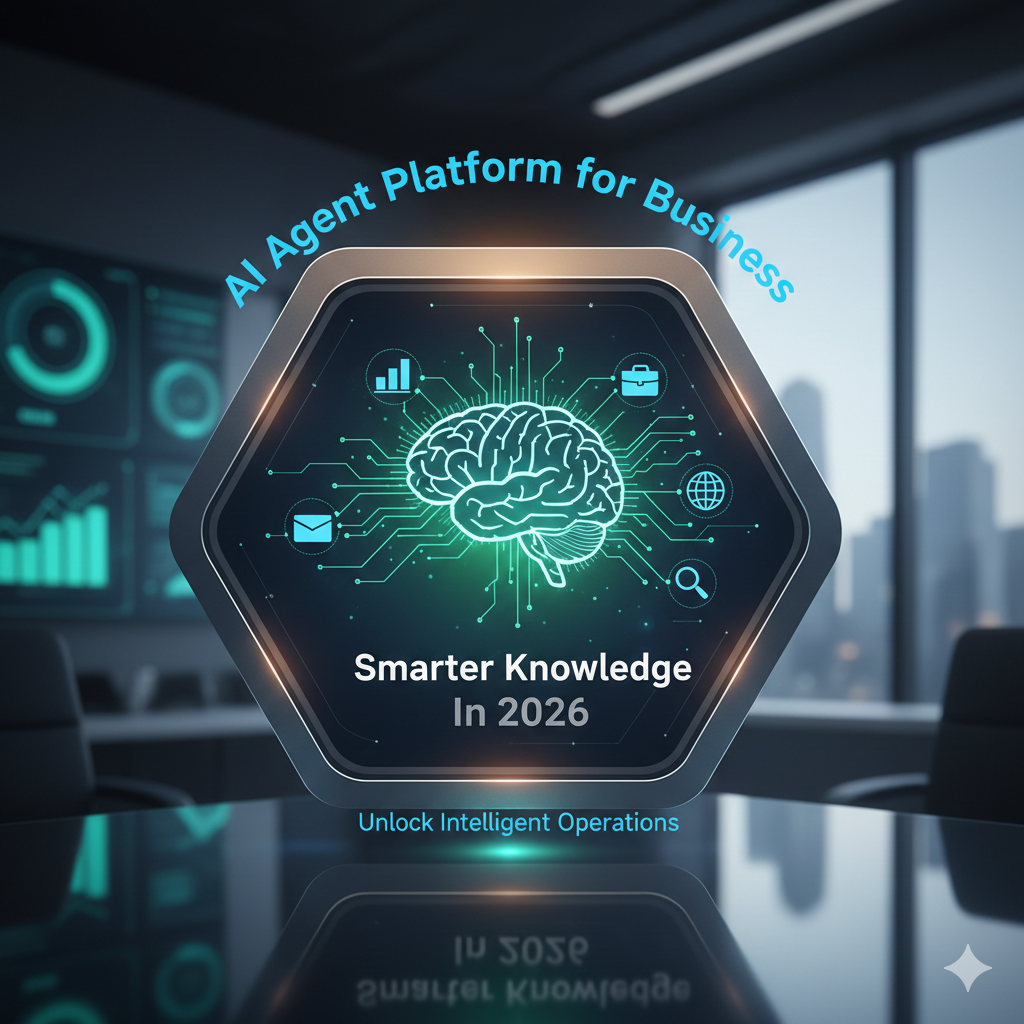
Every company says knowledge is power. But in many offices, knowledge is scattered. Important documents sit in folders. Policies hide inside shared drives. Answers live in someone’s inbox. Teams waste hours searching for information that already exists. This is why an AI agent platform for business is becoming central to modern knowledge systems. It does not just store information. It understands it. It retrieves it. It delivers it when needed. In 2026, building a smarter enterprise knowledge system is no longer optional. It is survival.
The Problem with Traditional Knowledge Systems
Most companies built their knowledge systems years ago. They created internal portals. They stored documents in shared folders. They added search bars.
But search alone is not enough. Traditional systems depend on keywords. If you do not type the exact phrase, you may not find the right file. Employees open multiple documents. They scroll. They skim. They guess. This creates friction. It slows down work. It reduces productivity. An intelligent system changes the experience. Instead of searching for files, employees ask questions. Instead of scanning documents, they receive direct answers.
Modern Enterprise AI chatbot software connects to knowledge sources and responds in plain language. It understands context. It pulls relevant information instantly. This shift is not just technical. It is cultural. It moves teams from hunting for information to accessing it naturally.
Key Differences: Traditional Knowledge vs AI-Driven Systems
Below are the most important differences between older knowledge management approaches and AI-powered systems.
1. Keyword Search vs Context Understanding
Traditional systems rely on keywords. If your phrasing does not match the stored text, results fail. AI-driven systems understand intent. They read the meaning behind a question. They return answers even if the wording differs.
2. Static Documents vs Conversational Access
Old systems require users to open and read full documents. AI systems allow conversational access. Users ask a question. They receive a clear response without having to read 10 pages.
3. Manual Updates vs Continuous Learning
Traditional knowledge bases require manual editing and reorganisation. AI-powered systems improve through usage patterns and feedback, making updates more efficient.
4. Isolated Departments vs Unified Knowledge
Older systems often separate HR, IT, and support documentation. AI systems connect all knowledge sources into one accessible layer.
5. Passive Storage vs Active Assistance
Traditional systems store data passively. An AI-powered system actively assists. It responds. It guides. It suggests.
Quick Comparison Table
| Feature | Traditional Knowledge Base | AI Knowledge System |
| Search Type | Keyword-based | Context-aware |
| Access Method | Manual document review | Conversational queries |
| Update Process | Manual editing | Continuous refinement |
| Structure | Department silos | Unified system |
| User Experience | Passive browsing | Active assistance |
This comparison shows why enterprises are rethinking their knowledge strategies.
Building Smarter Enterprise Knowledge in 2026
Building a strong system requires more than adding AI to documents. It requires structure and planning.
- First, centralise knowledge sources. Gather policies, guides, FAQs, and internal documents. Remove duplicates—clean outdated files. Clear input leads to accurate output.
- Second, define user access. Decide who can view, edit, or update information. Security matters. Especially in large organisations.
- Third, train the system carefully. Upload structured documents. Add Q&A entries. Provide context. The better the input, the stronger the responses.
- Fourth, test thoroughly. Ask real employee questions. Identify gaps. Improve weak areas.
- Fifth, measure usage. Track how often employees ask questions. Monitor response accuracy. Look for patterns in repeated queries.
A true Enterprise-grade AI chatbot does more than answer questions. It integrates securely with business systems. It respects permissions. It maintains data integrity.
Use Cases Across the Enterprise
AI knowledge systems are not limited to one department.
HR Use Case
Employees can ask about leave policies, benefits, or company rules and receive clear answers in seconds. Instead of searching through long documents, they get direct guidance that saves time and reduces confusion.
IT Use Case
Staff can ask for help with common issues and get step-by-step troubleshooting guidance right away. This reduces support tickets, shortens waiting time, and keeps teams working without long interruptions.
Sales Use Case
Teams can instantly access product details, pricing data, or feature comparisons while speaking with clients. Quick and accurate answers increase confidence and help secure deals without hesitation or confusion.
Compliance Use Case
Employees can access company policies and regulatory guidelines instantly. Clear and consistent answers reduce risk, prevent mistakes, and ensure everyone follows the same standards across departments.
These use cases save time. They reduce frustration. They increase consistency across departments. When employees trust the system, adoption rises. When adoption rises, productivity improves.
Why Trust Matters in Enterprise AI
Enterprises cannot adopt just any solution. They require reliability. They require security. They require governance. A Trusted AI chatbot platform ensures controlled access and clear data handling. It supports compliance needs. It logs usage for transparency. Trust is not only about technology. It is about predictability. Employees must know that answers are accurate and up to date. That requires ongoing monitoring. It requires review cycles. It requires leadership commitment. Without trust, adoption fails.
Balance Automation with Human Oversight
AI does not replace human expertise. It supports it. Knowledge systems should include escalation paths. If a response feels confusing or too detailed, users should know the next step to take. This balance keeps quality strong. Automation manages common questions. People make important decisions. Together, they build a steady and reliable knowledge system.
Future Trends in AI Knowledge Management
Looking ahead, AI systems will become more personalised. They will recognise user roles. They will adjust responses based on the department. They will integrate with project management and communication tools.
They will move from reactive systems to proactive assistants. Instead of waiting for questions, they may suggest relevant updates. Companies exploring these capabilities often evaluate platforms like GetMyAI to understand how modern AI agents can support enterprise use cases. The goal is not just automation. It is intelligent enablement.
Challenges to Consider
- Even with advanced systems, challenges exist.
- Poorly structured data leads to weak responses.
- Outdated content creates confusion.
- Lack of governance reduces trust.
Implementation must be strategic. It must include change management. Employees need training on how to use the system effectively. Technology alone does not create success. Adoption does.
Conclusion
AI knowledge management is reshaping enterprise operations. A business AI agent platform helps organisations move beyond static document storage. It delivers information quickly, accurately, and conversationally. By combining structured data, secure integration, and continuous improvement, enterprises can build smarter knowledge systems in 2026 and beyond. Technology will continue to evolve. But the principle remains simple. Knowledge must be accessible. It must be reliable. And it must support people in doing their best work.