

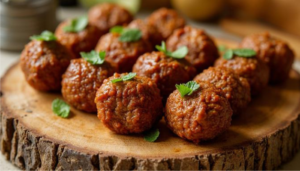


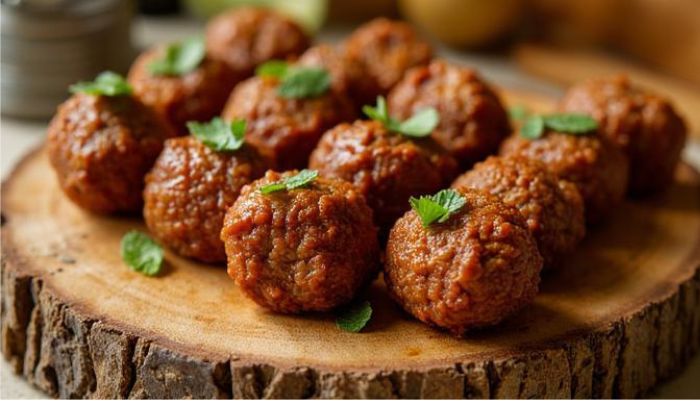
Imagine a table spread wide with the vibrant colours of the Mediterranean. You have the bright green of parsley in the tabbouleh and the creamy white of hummus swirling with olive oil. Yet, right in the centre, commanding the most attention, sits a platter of golden brown, football-shaped croquettes. This is kibbeh. It is arguably the most celebrated dish in Levantine cuisine and a masterpiece of texture and flavour.
To call kibbeh a simple meatball would be a disservice to the artistry that goes into making it. It represents centuries of culinary tradition across Lebanon, Syria, Palestine, and Jordan. While it has travelled as far as Brazil and the Dominican Republic, where it is known as quibe, its heart remains firmly in the Middle East.
At its core, kibbeh is a harmony of two primary ingredients. These are fine bulgur wheat and meat, usually lamb or beef. The magic happens in how these humble components are processed and combined. The outer shell is made by kneading bulgur with very lean minced meat and spices until a smooth dough forms. Inside this shell lies a savoury stuffing called hishweh. This filling usually consists of sautéed ground meat, onions, pine nuts, and a fragrant blend of spices like cinnamon, allspice, and black pepper.
The Cultural Heartbeat of the Levant
Food in the Middle East is rarely just about sustenance. It is about gathering, family, and hospitality. Kibbeh perfectly embodies this spirit. Historically, making this dish was a communal activity. Before modern food processors existed, women would gather to pound the meat and bulgur in a large stone mortar called a jurn. The rhythmic pounding required immense physical effort and time. It was an act of love and a way to socialise.
Today, technology has made the process faster, but the sentiment remains the same. Kibbeh is often reserved for Sunday family lunches, holidays, and weddings. It is the kind of dish that signals a special occasion. When a host serves it, they are offering you the very best of their kitchen.
A Landscape of Variations
Most people recognise kibbeh in its fried form. These are the Kibbeh Raas, or “heads” of kibbeh. They are shaped into distinct torpedoes with tapered ends. When fried, the outside becomes incredibly crispy and dark golden brown, while the inside remains steamy and aromatic.
However, the world of kibbeh is vast. The versatility of the bulgur-and-meat dough allows cooks to prepare it in dozens of ways.
Kibbeh Bil Sanieh is one of the most popular home-cooked versions. Instead of shaping individual balls, the cook layers the ingredients in a round baking tray. A layer of the meat dough goes on the bottom, followed by the spiced stuffing and pine nuts, and finally topped with another layer of dough. The cook scores the top into diamond shapes before baking. It is essentially a Middle Eastern meat pie. It offers the same incredible flavour profile as the fried version, but is healthier and less labour-intensive.
For the true connoisseur, there is Kibbeh Nayyeh. This is raw kibbeh. It is similar to steak tartare, but with a distinctly Levantine texture from the bulgur. Freshness is the absolute priority here. The meat must be butchered specifically for this dish, ensuring it is completely lean and free of gristle. It is kneaded with cracked wheat and spices, then served cold on a plate with a drizzle of olive oil, fresh mint, green onions, and pita bread. It is a delicacy that highlights the quality of the ingredients above all else.
There are also soups and stews. Kibbeh Labanieh features small, round balls of kibbeh cooked gently in a warm, garlic-infused yoghurt sauce. This dish is the definition of comfort food. The tanginess of the hot yoghurt balances the richness of the meat perfectly.
Vegetarians are not left out of this tradition. During religious fasting periods, cooks created brilliant plant-based versions. Kibbeh Laktin uses pureed pumpkin and flour to create the outer shell, while the filling is made of spinach, chickpeas, and sour sumac onions. Potato kibbeh is another beloved variant that offers a soft, savoury bite.
The Art of Preparation
Making excellent kibbeh takes practice. The ratio of bulgur to meat in the shell is critical. If you use too much bulgur, the shell will be gritty and dry. If you use too much meat, it will shrink and lose its crispness during frying. The goal is a dough that is pliable and smooth.
The spices are what give the dish its soul. Every family has a preferred blend. Generally, a mix known as “Seven Spices” or Baharat is the standard. This blend usually contains allspice, coriander, black pepper, cardamom, cloves, and nutmeg. A generous amount of cinnamon is also common in the filling, providing a warmth that pairs beautifully with the sweet, buttery crunch of pine nuts.
Shaping the fried version is the step that intimidates most beginners. You start with a ball of dough and use your index finger to hollow it out as you rotate it in your palm. The objective is to make the shell’s walls as thin as possible without breaking them. A thin shell ensures the perfect ratio of crunch to filling. Once stuffed, you seal the top and taper the ends. It is a tactile process that requires a gentle hand.
Serving and Pairing
Because kibbeh is rich and savoury, it needs fresh, acidic accompaniments to cut through the heaviness. You will almost always find lemon wedges served alongside fried or baked kibbeh. A squeeze of fresh lemon juice brightens the earthy flavours of the bulgur and lamb.
Yoghurt is another essential partner. A side of cold cucumber yoghurt salad with dried mint complements the hot, crispy meat beautifully. A bowl of hummus or baba ghanouj is also standard. For a complete meal, a large bowl of Tabbouleh or Fattoush salad provides the necessary crunch and greenery.
A Timeless Tradition
Kibbeh is more than just a recipe found in a cookbook. It is a testament to the history of the Levant. It showcases how simple, earthy ingredients like wheat and meat can be transformed into something elegant through patience and technique.
Whether you enjoy it fried and crunchy as a street snack, baked in a tray for a family dinner, or served raw as a delicacy, kibbeh offers a window into the soul of Middle Eastern hospitality. It is complex, comforting, and undeniably delicious. If you have never tried making it, the process is a rewarding journey. If you are simply eating it, take a moment to appreciate the centuries of tradition packed into every golden bite.
If you want to read more information, visit
