Have you ever yawned or opened your mouth wide to take a big bite—and suddenly heard a pop from your jaw, but felt absolutely nothing? It’s confusing. You’re left asking: “Why does my jaw pop but doesn’t hurt?” You’re not alone. Many people hear that click or popping sound but go about their day pain-free.
In this article, I’ll walk you through how your jaw works, why it might make noises without pain, when it’s harmless, and when it’s a sign you should see a professional. I’ll also include some realistic self-care options, precautions, and what I would do if I faced this myself.
2. How the Jaw (TMJ) Works: the Basics
To understand jaw popping, it helps to first know how the jaw joint works.
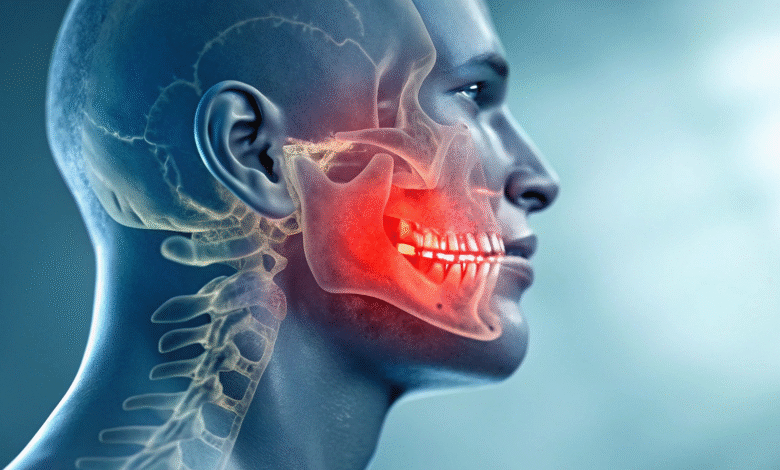
Your lower jawbone (mandible) has two joints—called the temporomandibular joints (TMJs)—that connect it to your skull, right in front of your ears. These joints are quite complex:
-
Between the skull and jaw bone is a small disc of cartilage that acts like a cushion and helps smooth movement.
-
The joint is supported by ligaments and tendons, which keep it stable yet flexible.
-
Surrounding the joint are muscles that handle chewing, speaking, and other movements.
When you open, close, or move your jaw side to side, these components slide, glide, rotate, and shift in harmony. If anything shifts slightly out of alignment, you might hear a noise.
So a popping or clicking noise is often just one part of that system moving in a slightly different way—but it doesn’t always mean something is wrong.
Read Also: Fake it till you break it by k.a. tucker goodreads
3. What “Jaw Popping / Clicking” Means
Before going into causes, it helps to define terms and what they imply.
-
Clicking / popping: A distinct sound (click or pop) during movement—opening, closing, shifting.
-
Crepitus / crackling / grinding: More like many small grains or grating noises (bone rubbing).
-
With vs without pain: The big distinction. Popping with pain is more concerning.
A common scenario: when you open wide (yawn or take a big bite), the disc or ligament may momentarily shift and then snap back, producing a sound. If that happens but lands back in place without irritation, you may not feel pain.
Experts often call noises “normal” when they’re painless and not accompanied by other symptoms.
That said, “normal” doesn’t mean “can ignore forever”—you need to watch for changes.
4. Why Your Jaw May Pop Without Pain
Here are several mechanisms that can explain a painless jaw pop:
a) Gas bubbles in the joint fluid
The joint has synovial fluid (a lubricant) around it. Sometimes small gas bubbles form and burst when the joint moves—like cracking knuckles. That burst can cause a little pop sound. Because it’s internal to the fluid, it doesn’t cause inflammation or pain.
b) Disc displacement with reduction (slight shifting)
Suppose the cartilage disc shifts slightly away from its optimal track but then slides back into place during motion. That movement can make a click. If the disc returns smoothly without stress or friction, it often won’t hurt.
This is sometimes called “disc displacement with reduction”. The “with reduction” part means the disc returns to normal. In many people, it causes no symptoms besides sound.
c) Ligament or tendon catching over bony structures
Sometimes a ligament or tendon might rub over a small edge of bone, making a popping sound as it slips over. If that motion is smooth and not forceful, it may not irritate tissues. Think of a rope sliding over a smooth rock edge.
d) Joint hypermobility or laxity
Some people’s ligaments are looser (more elastic). Their joints tend to move more freely. In these cases, tissues may shift more readily and produce noise even without damage.
Hypermobile joints are more “noisy” in general (in various joints), and that can extend to the TMJ.
e) Early wear or mild degeneration (but not yet painful)
If some early cartilage wear or micro-changes begin, these might cause minor irregularities that lead to sound—but not yet enough to provoke inflammation or pain. This is rare at early stages, and usually such wear goes slowly.
f) Overuse / microtrauma
Habitual stress—like chewing hard foods, habitual gum, repetitive motions—can subtly affect alignment or tension. If the strain is mild, the joint may adjust and only make noise rather than provoke pain.
5. When Jaw Popping Without Pain Is Normal
Given the above, many experts view painless jaw popping as a usual variation of joint behavior.
-
The National Institute of Dental and Craniofacial Research says clicking or popping without pain is common and often normal.
-
In many people, the noises do not require treatment unless they become symptomatic.
-
When the clicking only happens occasionally (for example, when yawning widely) and causes no discomfort, it’s usually not a sign of serious trouble.
So, if you hear a pop once in a while, with no jaw stiffness, pain, or limitation, it often does not demand medical intervention.
Still, monitoring over time is wise—especially if anything changes.
6. Potential Underlying Causes (Even if No Pain Now)
Even though your jaw popping might be benign now, it could hint at early stages of other conditions. Knowing these helps with preventive steps.
a) Temporomandibular disorder (TMD / TMJ disorder)
TMD is a broad term for diverse issues affecting the jaw joint and muscles. Sometimes the earliest sign is popping/clicking before pain sets in.
If left unchecked, TMD can progress to stiffness, pain, or locking.
b) Bruxism (teeth grinding / clenching)
Grinding or clenching, especially at night, puts heavy stress on the joint and muscles. Over time, that can lead to clicking, and later pain. Even if you don’t feel pain now, it’s a risk factor.
c) Malocclusion / bite misalignment
If your upper and lower teeth don’t align well, your jaw may move in a slightly imbalanced way. That can cause the joint or disc to shift slightly, making noises. In many cases, though, malocclusion alone doesn’t cause pain or clicking unless severe.
d) Past trauma / microinjuries
You might have had a minor jaw injury or microtrauma (e.g. from chewing something hard, a blow, or repetitive overuse). These may not cause pain immediately but can affect how the disc or ligaments align.
e) Arthritis / degenerative joint disease
With age or wear, joint cartilage may degrade and bones may roughen. These changes can produce more joint noise (crepitus). At early stages, pain may not be present, but over time degeneration may worsen.
f) Connective tissue or ligament laxity
If someone has a connective tissue condition or just naturally lax ligaments, joints may be more mobile and noisy without pain.
7. Warning Signs & When to See a Professional
If your jaw continues to make noise but remains perfectly comfortable, you may not need medical care. But here are red flags to watch for:
-
Onset of pain in the jaw, ear, face, or neck
-
Locking: jaw gets stuck open or closed
-
Limited movement: difficulty opening or closing fully
-
Change in bite / teeth alignment
-
Ear symptoms: earache, ringing, fullness
-
Swelling, redness, or tenderness around the joint
-
Persistent stiffness, especially in the morning
-
Crepitus / grinding (many small rough sounds)
-
Problems eating, speaking, or jaw fatigue
If you observe any of these, see a dentist, oral surgeon, or TMD specialist.
8. What You Can Do (Self-care)
Here are practical steps to try if your jaw pops but doesn’t hurt. These help maintain joint health and may reduce the noise.
a) Gentle jaw exercises & stretches
-
Controlled opening: place two fingers between your front teeth and open slowly to just below the point of clicking, hold, and close gently.
-
Side-to-side motion: move your jaw slightly left and right (without forcing) to maintain flexibility.
-
Resisted closure: put your hand under your chin and press upward gently as you close, to strengthen muscles (do carefully).
Always do movements slowly and mindfully, stopping if anything hurts.
b) Soft diet & avoid hard chewing
Give your jaw some rest. Stick to softer foods (soups, mashed, soft-cooked veggies) and avoid tough meat, hard candies, nuts, crunchy foods which strain the joint.
c) Posture & neck alignment
Your jaw is part of a chain from head to neck to spine. Slumped posture or forward head posture can strain your jaw and neck muscles. Keep your head aligned and shoulders relaxed.
d) Avoid overuse habits
-
Avoid chewing gum
-
Don’t bite nails or pens
-
Limit yawning too wide
-
Avoid clenching your jaw consciously
e) Gentle massage / heat or ice
-
Use a warm compress (not hot) on the sides of your jaw to relax muscles
-
Gentle massage of the masseter (cheek muscle) and temporalis (temple)
-
Cold pack (wrapped) if you sense minor swelling (but usually no swelling in painless clicking)
f) Stress management
Stress often leads to unconscious tension, clenching or grinding. Practices like relaxation, meditation, reducing caffeine, or evening wind-down routines may reduce strain.
g) Night guard or splint (if grinding suspected)
If you suspect you grind or clench your teeth (often at night), a custom night guard from a dentist can reduce the strain on the joint while sleeping.
h) Monitoring & keeping a journal
Track when popping happens (e.g. on waking, after meals, after stress), whether it changes, whether new symptoms appear. This helps professionals later if needed.
9. Professional Evaluation & Treatment Options
If self-care isn’t enough or red flags emerge, here’s how professionals approach diagnosis and treatment.
a) Diagnostic steps
-
Medical / dental exam: checking joint sounds, symmetry, movement, palpation
-
Imaging: X-rays, CT scans, MRI (especially to view the disc)
-
Dental / occlusal analysis: check bite alignment
-
Muscle palpation: checking tension in masticatory muscles
These help determine which structure is involved (disc, ligament, muscle) and how severe.
b) Conservative (non-invasive) treatments
-
Physical therapy / jaw therapy: guided exercises, manual therapy
-
Occlusal splints / bite guards: to relieve pressure
-
Medications: anti-inflammatories, muscle relaxants (short term)
-
Behavioral therapy / relaxing techniques
-
Biofeedback: to help reduce clenching
These approaches aim to stabilize the joint, reduce stress, and retrain movement.
c) Dental / orthodontic corrections
If bite alignment is a factor, orthodontic (braces) or restorative dental work may help balance pressures. However, dentists usually avoid irreversible changes (e.g., grinding down teeth) unless necessary.
d) Injections / minimally invasive methods
-
Corticosteroid injections (in joint)
-
Hyaluronic acid injection
-
Arthrocentesis / arthroscopy: techniques to wash or reposition disc
These are used when conservative measures fail and the joint structure needs support.
e) Surgery
Surgery is a last resort. In severe cases (where disc is damaged severely or structural deformity exists), a surgeon may perform joint replacement or open joint surgery. But this is rare and only after careful evaluation.
10. My Thoughts & What I’d Do
If I were experiencing a painless jaw pop, this is what I’d do:
-
Stay calm—noise without pain is not immediately alarming.
-
Start self-care: soft diet, posture check, avoid overuse, gentle exercises.
-
Monitor for any changes—especially pain, locking, stiffness.
-
If I suspect grinding or clenching (especially at night), consult a dentist about a night guard.
-
If the popping worsens or other symptoms arise, see a TMJ specialist for evaluation.
I believe in a cautious, gradual approach: act gently, don’t force changes, but don’t ignore new symptoms. Sometimes small habits (chewing gum, phone posture) make a difference.
11. Summary & Recommendations
-
A jaw that pops without pain is often benign and fairly common.
-
Many underlying causes (gas bubbles, slight disc shifts, loose ligaments) can produce sound without discomfort.
-
Still, it’s worth keeping an eye out for warning signs (pain, locking, bite changes).
-
Start with conservative steps: gentle exercises, soft diet, posture, stress control.
-
If anything worsens or becomes concerning, seek professional care early.
12. Conclusion
That loud click or pop from your jaw can feel disconcerting, but in many cases, it’s just a quirk of your joint and tissues adjusting. As long as there’s no pain, limitation, or changes, it’s often not a problem. The key is awareness—taking gentle steps to support your jaw health and recognizing when something changes enough to warrant professional help.
Treat your jaw kindly. Don’t force movements. Give it rest, monitor it, and act when needed. With care and attention, many people carry on with no issues—and even the popping may lessen over time.
13. FAQ
Q: Is jaw popping without pain always harmless?
A: Not always, but usually. Most of the time it’s benign. But if symptoms like pain, locking, or bite changes develop, it’s worth getting checked.
Q: Can jaw popping turn into pain later?
A: Yes. If underlying mild stress, grinding, or structural shifts worsen, you might begin feeling discomfort. That’s why early self-care and monitoring are smart.
Q: Will jaw exercises make it worse?
A: If done aggressively, yes. But gentle, guided exercises (with professional advice) often help maintain flexibility and reduce strain.
Q: Should I use a mouthguard even if I don’t feel pain?
A: If you suspect grinding or clenching, a dentist may suggest a nightguard as a precaution. It doesn’t hurt to consider it, but it’s not always needed if no symptoms.
Q: When should I go to a specialist?
A: If pain starts, locking occurs, your bite changes, or jaw movement becomes restricted. Also if noises worsen significantly, or you feel ear or facial symptoms.