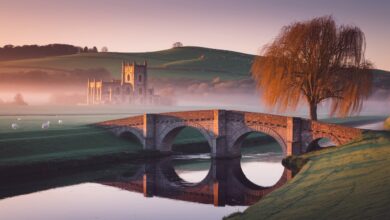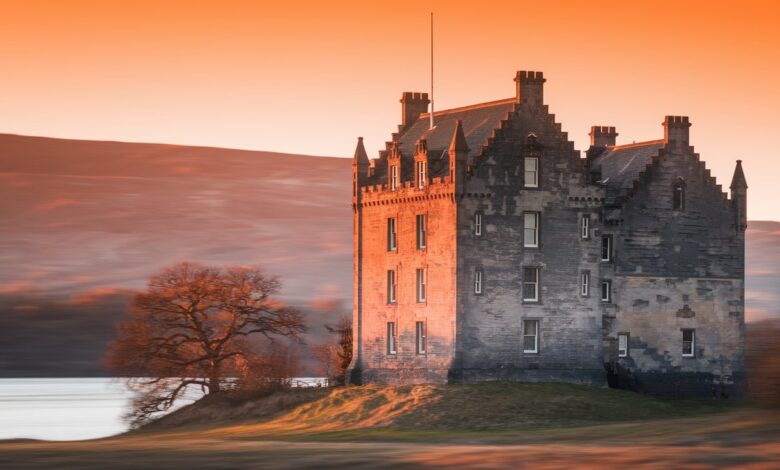
Nestled on the north bank of the River Clyde, where the water begins to widen on its journey to the sea, sits a town that carries a weight of history far greater than its modest size suggests. To the casual traveler speeding towards Glasgow or the scenic lochs of the west, Dumbarton might appear as a brief interruption in the landscape, a silhouette of industry against a green hill.
But to pause, to look closer, is to discover a place that is not merely a town, but a keeper of secrets, a silent witness to the very forging of Scotland itself. This is the story of Dumbarton, a place where ancient rock, royal destiny, industrial ingenuity, and community spirit converge.
Our story begins not with the town, but with the rock that commanded its existence. Dumbarton Rock is not a gentle hill; it is a volcanic plug, a formidable bastion of basalt that erupts from the flatlands at the confluence of the River Leven and the River Clyde. Its name, Dumbarton, derives from the Gaelic Dùn Breatainn, meaning “Fortress of the Britons.” But long before that name was uttered, it was known as Alt Clut, the Rock of the Clyde, the heart of the Kingdom of Strathclyde.
From the fifth to the eleventh centuries, this kingdom of Celtic Britons thrived, with Dumbarton Rock as its impregnable capital. Imagine a time of warring tribes, of painted warriors and sailing longships. The Rock was a natural fortress, its sheer cliffs providing a defensive advantage that was almost unparalleled. On its summit, a thriving community of royalty, soldiers, and craftsmen lived, looking out over their domain, a strategic vantage point that controlled river and sea traffic.
It was a place of immense power and significance, so much so that in 870 AD, after a four-month siege, it was captured by a Viking host from Dublin. The fall of Alt Clut was a cataclysmic event, echoing through the chronicles of early Scottish history and marking the end of an era.
This deep and royal history is the first layer of Dumbarton’s identity. The Rock is not just a geological feature; it is the bedrock of a nation’s memory. Walking the paths that wind up its twin summits today, you are treading the same ground where kings made decisions that shaped the destiny of the ancient north. The views from the top are breathtaking, stretching over the Clyde to the hills beyond, but they are also humbling. You are standing in the footprint of a lost kingdom, a place that was old when William Wallace and Robert the Bruce were yet to be born.
From Royal Fortress to National Icon
As the centuries turned, the strategic importance of the Rock never waned. The fortress of Alt Clut evolved into the Castle of Dumbarton. It became a royal castle, a key stronghold in the turbulent wars of Scottish independence. Its most famous chapter in this period involves a figure who embodies the spirit of Scotland: William Wallace. After his capture in 1305, it was to Dumbarton Castle that he was first taken before being transported to London for his brutal execution. The castle walls, cold and unyielding, were the last in Scotland to hold the man who became a national legend.
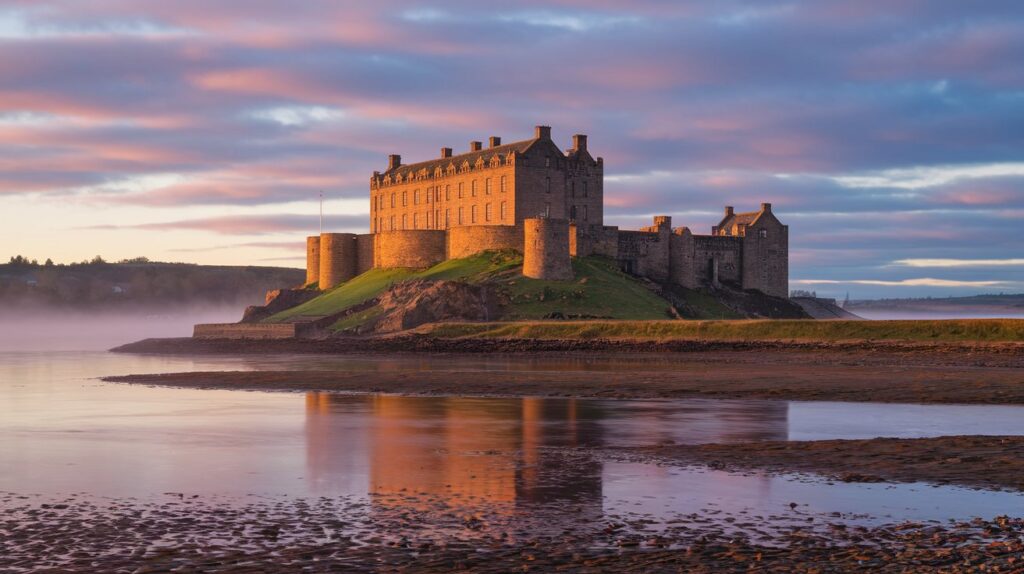
Later, the castle served as a vital gateway and a place of refuge. Mary, Queen of Scots, as a child, was sheltered here before her fateful journey to France to be betrothed to the Dauphin. For centuries, Dumbarton Castle was more than a local landmark; it was a piece of national infrastructure, a symbol of royal authority and military might. Today, managed by Historic Environment Scotland, it stands as one of Scotland’s oldest fortified sites. Exploring its ramparts, guardhouses, and the surprisingly spacious magazine, you can feel the layers of time. It is a place that demands quiet contemplation, where the wind seems to whisper stories of sieges, royalty, and the enduring struggle for a nation’s soul.
The Whisky and the Ships: The Industrial Heartbeat
If the Rock represents Dumbarton’s ancient soul, then the 18th and 19th centuries saw the town find its industrial muscle. The River Clyde, once a barrier and a defensive moat, became its highway to the world. Dumbarton emerged as a powerhouse of innovation and manufacturing, earning global renown in two distinct fields: shipbuilding and whisky.
The story of Dumbarton’s shipbuilding is a saga of engineering brilliance. The most famous name is that of William Denny and Brothers, whose shipyard at the Leven mouth became synonymous with cutting-edge maritime technology. The Dennys were not just builders; they were pioneers. They constructed some of the first ocean-going steamships and were relentless innovators, even operating their own experimental testing tank, a forerunner of modern marine engineering labs.
From majestic paddle steamers to elegant clipper ships that raced across the globe, the vessels launched from Dumbarton were feats of design and craftsmanship. The town’s skyline was once a forest of wooden masts and iron cranes, and the sound of riveting hammers was the soundtrack of daily life. This heritage is proudly preserved at the Scottish Maritime Museum, located on the site of the old Denny Shipyard, where you can see the last surviving ship built on the River Clyde, the MV Kyles, and feel the ghosts of a once-mighty industry.
Parallel to the clang of the shipyards was the quiet, patient art of distillation. In 1938, the Dumbarton Distillery Company was founded, and for over six decades, it produced a very specific and beloved type of Scotch whisky: grain whisky. Unlike the smoky, single malts of Islay or the Speyside, grain whisky is lighter and often forms the backbone of the world’s most popular blended Scotches. The Dumbarton Distillery, with its distinctive Coffey stills, was a giant in this field.
Its most famous product was the iconic Ballantine’s Finest, a blend enjoyed in over 100 countries. For many years, the sweet, earthy aroma of mashing grain hung over parts of the town, a fragrant counterpoint to the salty air of the Clyde. Though the distillery closed in 2002, its legacy is bottled and enjoyed by millions around the world to this day, a subtle yet profound contribution from this unassuming town.
The Modern Tapestry: A Town Reimagining Itself
The decline of heavy industry in the latter half of the 20th century hit towns like Dumbarton hard. The shipyards fell silent, and the distillery closed its doors. Yet, to see Dumbarton only through the lens of its past glories would be to miss its vibrant, resilient present. The town has been on a long journey of reinvention, weaving its rich history into a new, contemporary identity.
The Levengrove Park is a perfect symbol of this transformation. This beautiful public space, situated between the River Clyde and the River Leven, was once the very ground where the Denny Shipyard stood. Today, it is a place of leisure and community, with walking paths, play areas, and a stunning view of the Rock. It represents a poignant and beautiful transition: where mighty ships were once built, families now picnic and children play. It is a testament to the town’s ability to honor its past while embracing a new future.
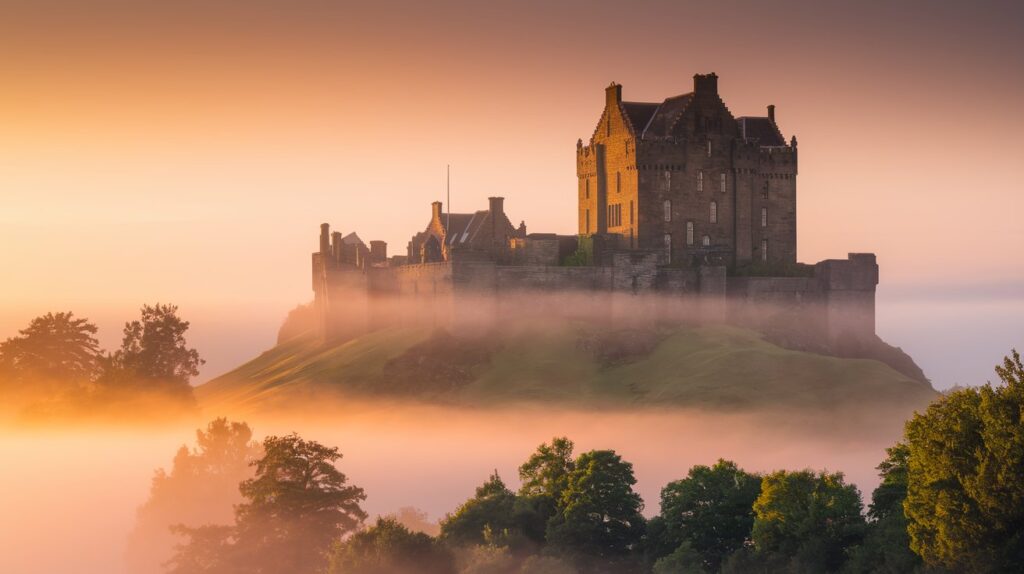
Dumbarton’s town center, while facing the challenges common to many British high streets, is a hub of local life. Independent shops sit alongside national retailers, and the local market buzzes with activity. The community is strong and vocal, with a deep sense of pride in its heritage. This is a working town, a real place, not a museum piece. Its elegance lies in its authenticity.
Furthermore, Dumbarton’s location is its modern strategic advantage. It serves as the administrative capital for West Dunbartonshire and is a key gateway to some of Scotland’s most stunning landscapes. From here, it is a short journey into the heart of Loch Lomond and The Trossachs National Park. The town is the perfect basecamp for explorers; you can wander through a thousand years of history in the morning and be hiking a mountain trail or cruising a loch in the afternoon.
Beyond the Rock: Discovering Dumbarton’s Hidden Gems
While the Castle is the undeniable star, a visit to Dumbarton is enriched by seeking out its quieter attractions.
The Denny Tank: Housed within the Scottish Maritime Museum, this is a place of pilgrimage for engineering enthusiasts. This is the very testing tank where William Denny and his team perfected hull designs that would conquer the world’s oceans. It is a space that hums with the spirit of innovation.
The River Leven Walkway: For a gentler perspective, follow the path along the River Leven from the town center towards Loch Lomond. This tranquil walk passes old industrial sites now reclaimed by nature, offering beautiful views and a sense of peaceful escape.
Local Life: Do not miss the chance to visit a local pub or cafe. Strike up a conversation, and you will quickly find that the people of Dumbarton, or “the Toon” as locals might say, are its greatest asset. Their warmth, wit, and fierce pride in their home are the living heart of the place.
A Legacy Carved in Stone and Forged in Steel
Dumbarton does not shout about its significance. It waits, with the quiet patience of its great Rock, for you to discover it. It is a town of profound contrasts: ancient and modern, industrial and natural, royal and resolutely common. It is a place where you can stand on a fortress that was the seat of kings and then, moments later, watch a modern container ship glide silently down the Clyde, a successor to the vessels built here with such pride.
Its story is the story of Scotland in microcosm: a narrative of resilience, reinvention, and an unbreakable connection to a rugged, beautiful landscape. It is a town that has been a capital, a castle, a workshop, and a home. So, the next time you find yourself on the banks of the Clyde, look beyond the silhouette. Take the time to climb the Rock, to walk the Levengrove Park, to learn the names of Denny and Ballantine’s. In doing so, you will not just be visiting a location; you will be reading a living, breathing chapter in the great book of Scottish history. Dumbarton is more than a dot on a map; it is the unassuming guardian of a nation’s soul, and its story is waiting to be heard.