
Introduction to Fauves and Fauvism
We explore Fauvism as one of the most influential and radical art movements of the early twentieth century. The term Fauves, meaning “wild beasts” in French, was used to describe a group of painters whose work shocked critics with its raw color, emotional intensity, and rejection of traditional realism. Fauvism did not aim to imitate nature. It aimed to express feeling through pure, unrestrained color and simplified form.
This movement marked a turning point in modern art. It broke away from centuries of academic rules. It opened the door to artistic freedom, shaping many movements that followed. Understanding the Fauves and Fauvism is essential for anyone studying modern art, color theory, or artistic expression.
The Origins of Fauvism
Fauvism emerged in France around 1904 and reached public attention in 1905 at the Salon d’Automne in Paris. The movement developed as artists began experimenting with color as an emotional and structural element rather than a descriptive one. Influenced by Post-Impressionism, Symbolism, and the expressive use of color in the works of earlier painters, Fauvist artists pushed these ideas to their limits.
The movement was never a formal group with a manifesto. It was a shared approach, driven by a desire to liberate color from realism. Fauvism was brief, lasting only a few years, yet its impact was permanent.
Why They Were Called the Fauves
Art critic Louis Vauxcelles gave the name Fauves after seeing their work displayed next to a classical sculpture. The violent contrasts, exaggerated colors, and bold brushwork appeared untamed and aggressive compared to traditional art. What was meant as criticism became the movement’s defining identity.
The Fauves embraced this label. They accepted the idea that art could be instinctive, emotional, and powerful without being polished or restrained.
Core Characteristics of Fauvist Art
We identify several defining features that distinguish Fauvism from earlier styles.
Bold and Non-Naturalistic Color
Color is the foundation of Fauvist painting. Artists used intense hues straight from the tube. Skin could be green, skies could be red, and shadows could be bright blue. Color was chosen for emotional effect, not realism.
Simplified Forms
Details were reduced to essential shapes. Complex modeling and perspective were ignored. This simplification allowed color to dominate the composition.
Strong Brushwork
Fauvist paintings often show visible, energetic brushstrokes. The application of paint feels immediate and expressive, reinforcing emotional impact.
Emotional Expression Over Accuracy
Fauvism valued feeling above faithful representation. Paintings were intended to convey joy, tension, warmth, or movement rather than to document reality.
Leading Fauvist Artists
Several painters defined the movement through their groundbreaking work.
Henri Matisse
We recognize Henri Matisse as the central figure of Fauvism. His mastery of color and composition shaped the movement’s identity. Works such as Woman with a Hat and The Joy of Life demonstrate how color can define space, emotion, and rhythm without reliance on realism.
Matisse believed color had the power to soothe, energize, and communicate directly with the viewer. His Fauvist period laid the foundation for his later innovations.
André Derain
André Derain was instrumental in developing Fauvism alongside Matisse. His landscapes, particularly those painted in Collioure and London, use striking color contrasts and bold outlines. Derain explored how color could construct form rather than describe it.
Maurice de Vlaminck
Maurice de Vlaminck brought raw energy to Fauvism. His thick paint, aggressive brushwork, and dramatic color choices gave the movement a rebellious edge. His work reflects spontaneity and emotional force.
Important Fauvist Paintings
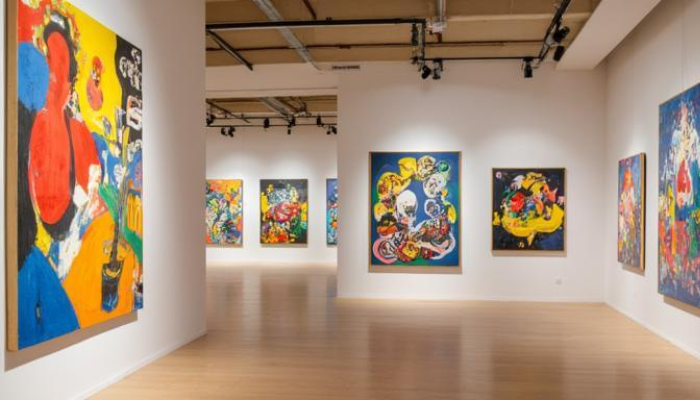
We highlight several key works that define Fauvism’s visual language.
Woman with a Hat by Henri Matisse shocked audiences with its unconventional portrait style and clashing colors.
Charing Cross Bridge by André Derain transformed an urban landscape into a vibrant color composition.
The River Seine at Chatou by Maurice de Vlaminck emphasized movement and intensity through saturated tones.
These paintings demonstrate how Fauvism redefined the purpose of color in art.
Fauvism’s Relationship to Other Art Movements
Fauvism acted as a bridge between nineteenth-century painting and the abstract movements of the twentieth century. It evolved from Post-Impressionism but rejected its concern with structure and optical accuracy.
Fauvism directly influenced Expressionism, especially in Germany, where artists adopted intense color to convey emotion. It also contributed to the development of Cubism, as artists began simplifying form even further.
Though short-lived, Fauvism proved that art did not need to imitate reality to be meaningful.
The Decline of Fauvism
By 1908, Fauvism began to fade as artists moved in different directions. Matisse refined his style, Derain turned toward more classical influences, and others explored new movements. Fauvism ended not because it failed, but because it succeeded in proving its point.
Its ideas were absorbed into modern art as a whole.
The Lasting Legacy of Fauves and Fauvism
We see Fauvism’s legacy in modern painting, graphic design, and even contemporary digital art. The belief that color can shape emotion and meaning remains central to artistic practice today.
Fauvism also changed how audiences view art. It challenged the idea that beauty must be realistic. Instead, it showed that expression, freedom, and intensity could define artistic value.
Art education continues to use Fauvist works to teach color theory and emotional composition. Museums around the world celebrate Fauvist paintings as milestones of creative liberation.
Why Fauvism Still Matters Today
Fauvism remains relevant because it represents courage in creativity. It reminds us that innovation often begins with breaking rules. In a world saturated with images, Fauvism teaches the power of simplicity and boldness.
We continue to study Fauves and Fauvism because they changed how we understand color, emotion, and artistic freedom. Their work stands as proof that a short movement can leave a permanent mark on cultural history.
Conclusion
We conclude that Fauves and Fauvism reshaped modern art by redefining the role of color and emotion. Through fearless experimentation and rejection of convention, Fauvist artists opened new paths for artistic expression. Their legacy lives on in every artwork that values feeling over formality and freedom over imitation.
If you want to read more information, visit